

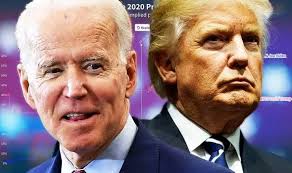
Polls Provide Conflicting Views of Hispanic Support for Biden vs. Trump


As the presidential campaign gains momentum, the Hispanic vote has become the subject of focused attention by pollsters who are reporting substantially different levels of support for candidates Trump and Biden. 

A recent poll sponsored by the Texas Hispanic Policy Foundation reported a rather surprising result: 47% preferred Biden while 38% preferred Trump – a 9 percent difference.  Based on this outcome as well as comparison’s to Hillary Clinton’s Latino support in 2016, various news sources are portraying Biden as losing ground with the Hispanic electorate or running a campaign that is out of touch with the needs of this important voter segment.  The online poll was conducted by YouGov using their proprietary methodology that has been widely used in past years but not necessarily in Hispanic-targeted polling.

The results from the Texas Hispanic Policy Foundation poll are especially surprising because they contradicted the findings of various recent polls that included sub-samples of Latino voters that generally found that Biden has enjoyed a double-digit lead over Trump. [1] 

Recent Polls Including Latino Sub-Samples

                   (Percent)

Source

Date

Biden

Trump

Difference

Quinnipac

7/22/2020

53

29

24

CBS/YouGov

7/12/2020

60

30

30

UT/Trib

7/3/2020

46

39

7

Fox News

6/25/2020

62

25

37

PPP/Progress Texas

6/23/2020

64

27

37

PPP/TDP

6/5/2020

66

23

43

Quinnipac

6/2/2020

53

32

21

Source:  Off the Kuff, 2020

 Curiously, this summary of recent polls by Kuff [2] omitted two other key polls conducted by survey organizations that have historically used the highest methodological standards when conducting polls of U.S. Latinos.[3]  For example, recent polling by Latino Decisions in six battleground states – including Arizona, Florida, Texas, North Carolina and Pennsylvania — confirmed a similar double-digit Biden advantage over Trump [4] while a recent poll of U.S. Latinos by Pew Research Center [5] also confirmed Biden’s double-digit lead over Trump. 

Lastly, an ABC/Washington Post poll released on Sept. 23, 2020 of likely voters shows that, among Latinos, Biden maintains a double-digit lead over Trump (61% vs. 34%) and a smaller double-digit lead in Florida (52% vs. 39%). [6]

Who is correct?  The answer to this question has important implications for the political messaging that is conveyed about Hispanic voters between now and election day since it could influence voter turnout. Is Biden really losing ground among Latino voters, or should we consider the poll sponsored by the Texas Hispanic Policy Foundation an anomaly?

Over the past 45 years, I have taught survey research methods at four North Texas universities and developed an interest in conducting post-mortems on the methodology employed in studies of multicultural persons whose results were conflicting or controversial. Over the years, this interest has included challenges to the Nielsen Hispanic television ratings, measurement bias in college admissions tests, biased surveys in municipal elections, estimates of COVID-19 mortality rates for Blacks and Hispanics, biased crime reporting in urban areas, and site location methods that reinforce redlining practices in communities of color.  The goal of these post-mortems is to help the general public understand which one of these conflicting or controversial studies is more deserving of our confidence using criteria that I have discussed elsewhere in some detail. [7]In my opinion, I would place my confidence on the pollsters with a proven track record in measuring Latino sentiments.  Let me explain my reasoning.

While I did not have sufficient information to conduct a detailed post-mortem on the methodology utilized by YouGov in the Texas Hispanic Policy Foundation study of Texas Latinos, there were some concerns that were noted by Huff in his recent summary of Latino polls. [8] For example, the report did not identify the Hispanic sample size and its margin of error, while the survey results may have been distorted due to the use of outdated 2016 data to weight the survey results. Huff also expressed concern about the obvious discrepancy between the YouGov poll results and the results from the various polls including Latino voters. While it has merit, it is my opinion that the methodology used by YouGov lacks the historical track record in measuring Hispanic voter sentiments that has been employed for decades by Latino Decisions and Pew Research Center.

Perhaps the more compelling reason that raises skepticism is the inference by political pundits that Hispanic voter support for Trump is on the rise, a rather untenable position given his repeated attacks and hate-filled speeches directed at U.S. Hispanics.  Indeed, are we to believe that Hispanics suddenly feel compelled to reward Trump with their votes despite these attacks?  I don’t think so. Hispanic families have suffered significantly under Trump’s presidency and are not likely to forget these attacks as they decide to cast their vote this November.

Jason Villalba, President of the Texas Hispanic Policy Foundation, concluded from his organization’s polling results that “neither presidential candidate has yet to completely lock down the Texas Hispanic vote.” [9]  Based on the concerns raised about YouGov’s polling methodology, I would say that his conclusion is pre-mature and lacks confirmation by other trusted sources. Moreover, the report appears dismissive of the substantial Latino support shown for Biden in the various other polls conducted recently and makes little effort to reconcile the contradictory findings. The Biden campaign has accumulated millions in their campaign fund which may be utilized to solidify his standing among Hispanic voters, especially in the battleground states. Indeed, there is room for optimism.

Going forward, I believe that we would be wise to place our confidence on the polling results provided by the more trusted sources in Latino polling with a proven track record such as Pew Research Center or Latino Decisions. 

 End Notes


[1] Kuffner, C. (2020, August). What is the level of Latino support for Trump in Texas?  Off the Kuff. Accessed at http://www.offthekuff.com/wp/?p=96928

[2] Ibid, Kuffner, C.

[3] Rincon, E.T. (2020, August).  The Culture of Research.  The Writer’s Marq LLC.

[4]  Latino Decisions (July 2020).  Latino Voter Engagement and Mobilization in Six States,  Accessed at: https://latinodecisions.com/polls-and-research/latino-voter-engagement-and-mobilization-in-six-states/

[6] Langer, G. (2020, Sept. 23).  Trust on the economy bolsters Trump in oh-so-close Florida and Arizona: POLL. ABC News, Accessed at: https://abcnews.go.com/Politics/trust-economy-bolsters-trump-close-florida-arizona-poll/story?id=73167150

[7] Ibid, Rincon, E.T.

[8] Ibid, Kuffner, C.

[9] Texas Hispanic Policy Foundation (2020, August 17). Texas Hispanics Prefer Biden: Trump Leads Overall in State. THPC website, Accessed at https://www.txhpf.org/2020/08/17/texas-hispanics-prefer-biden-trump-leads-overall-in-state/


Massive Census Under-Count Likely as Trump Forces Cut of 30 Days from Data Collection Schedule

As reported recently by National Public Radio on July 30, 2020, the Census Bureau announced that they have changed the end of data collection for Census 2020 from October 31 to September 30 – essentially cutting 30 days from the critical door knocking period used to reach hard-to-count communities. [1]  Under condition of anonymity, Census Bureau employees involved in overseeing local census offices voiced their concerns about this action:  “It’s going to be impossible to complete the count in time,” and “I’m very fearful we’re going to have a massive under-count.” 

The Democratic party is understandably very concerned with the Census Bureau’s decision. Why?  Because 40 percent of the American public has not completed the Census 2020[2]  and most of these non-respondents or “hard-to-count” persons include Hispanics, Blacks and immigrants that have historically voted for Democratic candidates.  This fact has not been lost on Republicans.

A substantial Census under-count would have serious political and economic consequences for many communities. Because the decennial census is used to determine a state’s legislative seats and Electoral College votes, an under-count could significantly change the political landscape to the advantage of the Republican party. In addition, the 2010 census counts were used for the distribution of $589.7 billion of federal tax dollars for Medicare, Medicaid, and other public services to 50 states and the District of Columbia – services that often support communities of color.  Importantly, a substantial under-count in any one state could lead to the diversion of funds away from that state to other states and uses. [3]  As explained more clearly by Andrew Reamer, Research Professor with the GW Institute of Public Policy: 

“For the large majority of programs, money lost due to an under-count doesn’t go back to the U.S. Treasury, it is spread around all other communities. For each program, Congress determines the size of the pie, the census data determine each community’s share of the pie. For each $1 Texas loses due to an under-count, California gets an extra 14 cents, more or less. My expectation is that Texas’s decision to not have a statewide complete count effort will annually add several millions of dollars to California’s treasury, courtesy of Texas taxpayers.” [4]

Steve Dillingham, the Census Bureau director and a Trump appointee, provided lawmakers little insight about the rationale for the recent timing change during recent testimony before the House Oversight and Reform Committee. Nonetheless, House member Gomez gave Mr. Dillingham a stern warning:


“It seems like there’s an obvious pattern that you’re not in control of the Census Bureau……your name will go down in history if this is the worst census ever conducted by the United States government.  You’re not going to runaway and say that this was only because of the Trump administration later on.  You will be responsible.” 


The change in the Census Bureau’s data collection schedule reflects the Trump administration’s growing desperation to control the outcome of the November election, and follows a series of other efforts to undermine the voting clout of groups that have typically supported the Democratic party, [5]such as attempting to include a citizenship question in the Census 2020 questionnaire, fabricating information about widespread voter fraud to discourage mail-in ballots, and delaying funding for the financially strapped U.S. Postal Service to undermine the efficient processing of mail-in ballots in the upcoming November election.

Given the high stakes consequences associated with a potential massive Census under-count, it is imperative that communities throughout the U.S. accelerate their efforts to increase response rates among hard-to-count communities.  With a current non-response rate of 40 percent, it is safe to assume that the strategies that have been employed thus far have not been very effective in engaging hard-to-count communities.  Therefore, following are some suggested strategies for providing hard-to-count communities an additional boost to complete the Census 2020 questionnaire over the next two months:

·       The messaging must personalize the consequences to families of not completing the Census questionnaire:  the loss of funds for school lunches, healthcare for mothers and children, food and nutrition programs for the poor and unemployed, immigrant support, etc. The message should also remind community members that a citizenship question is not included in the Census 2020 questionnaire.  The urgency of the messaging must be elevated and impactful. Old message concepts may not suffice at this point.

·       With a high penetration rate across varied demographic groups, wireless telephones should be used in communicating with hard-to-count communities and also include a link to the Census 2020 online questionnaire.

·       Hispanics must receive messaging in both English and Spanish since immigrant adults are more likely to communicate in Spanish, while children and non-immigrants are more likely to communicate in English. 

·       Retailers whose profitability depends on the economic viability of hard-to-count communities should also do their part to encourage customers to complete the Census questionnaire through store displays and paid advertisements.

·       High technology companies should allocate grants to expand the distribution of laptops and portable wi-fi devices to families during the next two months to facilitate the completion of the online Census questionnaire.

·       There are numerous non-profit and community organizations that serve hard-to-count communities and maintain frequent communication with their membership, such as churches, immigrant advocacy groups, soccer teams, baseball teams, football teams, basketball teams and others.  Such organizations should take advantage of the reach and trust that they have earned to promote completion of the Census 2020 questionnaire.

·       Trusted and recognized business and civic leaders from local communities of color should be included in all advertisements that promote completion of the Census 2020 questionnaire.


September 30, 2020 is the new deadline to complete the Census 2020, so there is little time left for communities to mobilize their outreach efforts.  A massive census under-count threatens the political and economic stability for all communities, regardless of political orientation, and needs to be taken seriously by everyone.

References


[1]Wang, H.L. (2020, July 30).  Census door knocking cut a month short amid pressure to finish count. NPR, access at https://www.npr.org/2020/07/30/896656747/when-does-census-counting-end-bureau-sends-alarming-mixed-signals

[2]Census Bureau Response Rates. Accessed at https://2020census.gov/en/response-rates.html

[3]Reamer, A.  (2018, March 19).  Counting for dollars: The role of the decennial census in the geographic distribution of federal funds. GW Institute of Public Policy, The George Washington University. Accessed at  https://gwipp.gwu.edu/counting-dollars-2020-role-decennial-census-geographic-distribution-federal-funds

[4]Reamer, A. (2020, February 26). Personal communication via email.

[5]Rincon, E.T. (2020, February 17). Undermining the 2020 Census: Trump’s Toxic Brew of Crime, Hysteria and Immigrant.  Accessed at  https://www.rinconassoc.com/undermining-the-2020-census-trumps-toxic-brew-of-crime-hysteria-and-immigrants

CDC Blunders in Excluding Communities of Color Among High Risk Groups for Covid-19

It really makes little sense.  Despite the fact that Blacks, Hispanics and Native Americans are being hospitalized and dying at considerably higher rates than whites in the U.S., the Center for Disease Control recently changed its definition of Covid-19 high risk groups to exclude these groups.[i]  Why?  Because they have concluded that the high virus rates are not due to genetics, and they want to avoid stigmatizing these groups as “Covid carriers.”  By taking this action, the CDC can now remove their priority status for the delivery of health services – a disturbing action that suggests the injection of partisan politics.
 Let’s consider the fact that older persons were initially identified among the high-risk groups and remain in that category for good reasons. Indeed, one would not argue that their high-risk status should be changed because they often reside in nursing or retirement homes that have been plagued by the coronavirus. The purpose of identifying key demographic characteristics that are associated with the prevalence of a disease or virus is to target intervention strategies towards such groups as quickly as possible to mitigate the spread of the disease or illness – regardless of the circumstances that created their vulnerability – such as social determinants like comorbidities, living arrangements and working conditions.  

The CDC’s justification for re-defining the high-risk categories – to avoid stigmatizing these groups as “Covid carriers” – is specious.  Communities of color have long been stigmatized in many industries for the wrong reasons, including their skin color, language and many other attributes.  Assigning a high-risk category for Covid-19 is a health-related assessment, not a stigma, and should not be used as a basis for denying health-related services as the CDC is apparently proposing.
What seems plainly obvious is that the Trump administration has forced the hand of the CDC experts once again.  First by re-directing the reporting of Covid-19 hospitalizations from the CDC to the Dept. of Health and Human Services to the great dismay of the national health community.  Secondly, by pressuring the CDC to moderate the perceived risk of attending schools in person despite the increasing infection rates in many communities. And now by re-defining Covid-19 high risk groups with a questionable rationale.
These actions are setting the stage in the U.S. for the unfair distribution of the Covid-19 vaccine once it becomes available, a disturbing scenario that is likely to deprive the vaccine from communities of color and other groups that have been re-defined as lower risk by the CDC. By allowing this new definition of risk by the CDC to continue unchallenged, communities of color can expect a longer period of infections and mortalities from the pandemic, and more limited access to a vaccine once it becomes available.  There is a clear need for strong advocacy from civic, business and community groups that represent communities of color to challenge and correct the direction that the CDC has taken in defining high-risk groups for Covid-19.   
References


[i]Associated Press (2020, July 25). US agency vows steps to address COVID-19 inequalities.  WFAA, accessed at https://www.wfaa.com/article/news/health/coronavirus/coronavirus-inequalities-cdc/507-a770cfc8-9967-4359-b84d-12684c6aa46f
 

President Trump Launches a Civil War Against the American Public

As the November presidential election nears, there are noticeable palpitations from the Trump campaign and his supporters, which has prompted an undeclared civil war against the American public. Fueling the anxiety level throughout the Republican party is Trump’s epic failure in acknowledging and managing the Covid-19 pandemic as well as the double-digit lead by Joe Biden in several national polls. To breathe new life to his failing campaign strategy, Trump has chosen to heighten the misery index across the country with a series of actions designed to weaken the democratic electorate and keep his job for another term.   Following is a sampling of the extreme and somewhat bizarre actions that the Trump administration has directed at the American public:
Voting and Apportionment 
·       Aggressive efforts to eliminate the use of mail-in ballots despite little evidence of voter fraud and the potential exposure of voters to Covid-19 infections.  According to recent research by the Pew Research Center,  “About two-thirds of Americans say the option to vote early or absentee should be available to any voter without requiring a documented reason, while a third say early and absentee voting should only be allowed with a reason. Democrats overwhelmingly back “no excuse” early or absentee voting: 83% support it. By comparison, 55% of Republicans say a documented reason should be necessary to vote early or absentee.” [1]  
·       Attempts to include a citizenship question in the Census 2020 questionnaire designed to discourage immigrant participation in the census – later rejected by the U.S. Supreme Court.
·       Recently signing an executive order to remove counts of unauthorized immigrants from the Census computations used to define legislative districts – an action that will be legally challenged by several civil rights organizations. According to recent analysis of government data by Pew Research, the removal of these immigrants would mean that three states each could lose a U.S. House seat, while three others each could gain one.
Covid-19
·       Stating the “testing was over-rated,” Trump has delayed increasing the level of funding for Covid-19 testing and tracking despite the growing surge in infections and mortalities throughout the country.
·       A refusal to issue a federal mandate to expand the availability of personal protective equipment (PPE).
·       Trump actually recommended the use of a disinfectant like Lysol to treat Covid-19 patients.
·       Requiring hospitals to re-direct records related for Covid-19 hospitalizations from the CDC to the Department of Health and Human Services – considered by the nation’s healthcare professionals as a political attempt to obscure the true picture of Covid-19 infections and mortalities. Further evidence that the Trump administration is politicizing the data collection and analysis the pandemic data is the recent announcement by the CDC that race and ethnic minorities are no longer considered high risk or meriting higher priority for certain health services [2]. Why?  Because their Covid-19 high hospitalization, infection and mortality rates result from social determinants, not genetics, and there is a need to avoid stigmatizing and victimizing these groups.  While social determinants are indeed important factors that contribute to the higher prevalence of Covid-19 in Black and Hispanic communities, it makes little sense to use this as a basis for removing their high risk designation — indeed, they are still at high risk regardless of the circumstances that placed them at high risk.
·       The continued failure to order a national mandate for wearing face masks despite the advice of global medical experts.
·       The failure to clear up the large amount of missing race-ethnic data related to Covid-19 mortalities which greatly underestimates the mortality rates for communities of color. According to Janet Hamilton, executive director of Council of State and Territorial Epidemiologists, race and ethnicity data is missing 80% to 85% of the time, while patient address and telephone numbers are missing as much as 50% of the time.  A standard form to record such information if often not used by physicians since it is not considered a priority. [2]
·       The failure to increase OSHA inspections of employers to check compliance with CDC recommended practices related to Covid-19 employment policies. Clusters of Covid-19 infections have grown rapidly in factories and food suppliers where employees are forced to work in close proximity without the proper protective equipment.
Education
·       Pressuring schools to allow in-person instruction despite the high Covid-19 infection rates in their communities and the increased potential of exposure to students and teachers.
·       Issuing an executive order requiring foreign students in U.S. academic institutions to attend in-person classes despite Covid-19 risk — later rescinded due to many protests from U.S. academic institutions and private high-tech employers.
Abusive Actions
·       Using tear gas and injuring residents engaged in peaceful protests, as recently occurred at protests at the White House and Portland, Oregon.
·       Threatening to send Federal agents to quell peaceful protests regarding Black Lives Matter, especially in “Democratic” cities like Chicago and Albuquerque.
·       Supporting the presence of the Confederate flag, statues and similar symbolism in public places that are racially divisive.
Immigration
·       Misportraying immigrants as criminals despite substantial evidence that their crime rates are lower than native-born residents in the U.S.
·       Failure to process new DACA (i.e., Dreamer) applications despite a recent ruling by the U.S. Supreme Court to allows this process.
Coupled with the support of the Republican party, Trump’s civil war against the American public will likely diminish voter participation among Democrats during the upcoming November election, expand the spread of Covid-19 infections and mortalities, and generally deteriorate the quality of life for all U.S. residents. This level of aggression towards the American public is perplexing, especially given that our political leaders are sworn to protect U.S. residents, not harm them. 
This is not the first time, however, that Trump’s patriotism for his countrymen has been the subject of some controversy. For example, Trump has consistently praised world dictators that are known to oppress the human rights of their constituents and disparaged recognized war heroes like the late Sen. John McCain.  According to a news report, Trump avoided military service during the Vietnam conflict due to a bone spur, which earned him the title “Cadet Bone Spurs” – a term attributed by Senator Tammy Duckworth, a Purpose Heart recipient.  A story in the New York Times [3]reported that a foot doctor in Queens who rented his office from Mr. Trump’s father, Fred C. Trump, suggested that the diagnosis was granted as a courtesy to the elder Mr. Trump. In addition to avoiding military service, Mr. Trump continues to show his support for racially divisive Confederate flags and statues.
By accelerating their civil war, Cadet Bone Spurs and his Republican comrades are apparently prepared to win the November election at any cost to the health, safety and civil rights of the American public. For the upcoming November election, voters should seriously question whether Donald Trump and his fellow Republicans deserve to  represent a country whose values and quality of life they have chosen to abandon.  
References

Governor Greg Abbott Fumbles the Ball on Covid-19

As the leading quarterback in Texas, Gov. Abbott has shown a repeated tendency to fumble the ball as Covid-19 infections have surged in Texas. Instead of following the advice of the nation’s top experts on controlling the spread of Covid-19, Gov. Abbott has opted instead to place the lives of many Texans at risk by following the GOP party line of opening the Texas economy.  The governor was warned repeatedly by the commissioners in Dallas and Harris counties that Texas was not ready to re-open its businesses, but their advice was ignored and sometimes ridiculed by Abbott.  The consequences of this oversight have been devastating. Not surprisingly, the Texas Democratic Party described the governor’s strategy as “reckless.” [1]

After the governor authorized the re-opening of Texas businesses, Travis, Harris and Dallas counties experienced record high cases for two weeks, surging to 4,739 on Thursday morning (June 25th) and tripling since Memorial Day.[2] These three counties are now reviving plans for temporary hospital facilities to prepare for overwhelmed hospitals.  Gov. Abbott finally acknowledged that the opening of businesses was perhaps a bit premature and should be “paused” to ease the burden on Texas hospitals.  As a result, he issued an executive order to close all bars in Texas and reduce the restaurant capacity to 50 percent.   Unfortunately, a definitive action to mandate the use of face masks in public – considered highly effective in slowing the spread of Covid-19 — did not emerge.

As the governor recently explained: “The last thing we want to do is go backwards and close down businesses…the pause will help our state corral the spread.”  Indeed, the Covid-19 spread does not pause simply by closing business establishments but will continue to seek other victims, especially those that are unprotected by face masks, meeting or working indoors in groups, and persons with existing comorbidities. 

The Covid-19 statistics in Texas are quite grim:  137,624 reported cases; 2,324 fatalities, and 59,018 active cases.[3]  How many more lives need to be sacrificed before Governor Abbott decides to more aggressively slow the spread of Covid-19?  Interestingly, while Governor Abbott continues to fumble with his hit-or-miss strategy, other states like New York, New Jersey and Connecticut that have more successfully controlled the spread of Covid-19 are requiring a 14-day quarantine for visitors from states like Texas with big outbreaks of the virus. [4]

Impact on Communities of Color in Texas
The consequences of these poor judgements by Governor Abbott have been compounded by two other factors:  the common victims of Covid-19 and the state’s demographic composition. Various studies have confirmed that Covid-19 infections and mortalities are disproportionately impacting Blacks [5] and Hispanics [6] in communities throughout the U.S.   For example, an analysis of recent Dallas County Covid-19 cases by UT Southwestern Medical Center revealed that Hispanics comprised 60 percent of all new cases while their county population was 40 percent. [7]  
Various explanations have been proposed to explain the heightened vulnerability of Blacks and Hispanics to Covid-19, including the types of jobs held (i.e., factories, food service); living in crowded situations with less options for social distancing; lack of Covid-19 testing; and skepticism about medical doctors.

The urgency of acting more quickly in Texas is compounded by the fact that Hispanics (39.2%) and Blacks (11.7%) collectively comprise half (50.9%) of the state’s population [8] — a demographic reality suggesting that the consequences of Covid-19 for these two segments of the Texas population are likely to be more severe as a result of Abbott’s continued failure to follow the advice of health experts.

To this point, there is evidence that Blacks and Hispanics are struggling more than whites and Asians to meet important daily needs since the pandemic started. In a major effort to help the nation monitor post-Covid-19 experiences on a weekly basis, the Census Bureau along with several federal agencies began surveys with samples of residents in 15 metropolitan areas and has made the results of these surveys available to the public.[9]  The survey, provided in English and Spanish, was designed as a timely and periodic measure of the impact of coronavirus (COVID-19) on the following topics:

  •         Employment status
  •          Food security
  •          Housing security
  •          Education disruptions
  •          Physical and mental well-being

Our analysis of the 1,586 surveys completed in the Dallas/Ft. Worth metropolitan area during the week of June 11, 2020 revealed the following race-ethnic differences on three of the topical areas:
·       Food security:  Hispanics (16.9%) and Blacks (15.5%) were more likely than whites (3.3%) and Asians (3.5%) to state that they were not at all confident about their ability to afford the kinds of food that they needed for the next four weeks.  Hispanics (12.4%) were more likely than whites (5.1%), Blacks (1.9%) and Asians (5.0%) to agree that it was often true that their children were not eating enough because they could not afford enough food.  Hispanics (15.8%) and Blacks (16.0%) were more likely than whites (6.5%) and Asians (2.3%) to agree that they sometimes/often did not have enough food to eat during the past seven days.
·       Employment status:  Hispanics (65.4%) and Blacks (51.9%) were more likely than whites (43.1%) and Asians (32.9%) to state that they or someone in their household had experienced a loss of employment income since March 3, 2020. In addition, Hispanics (48.5%) and Blacks (45.4%) were more likely than whites (24.0%) and Asians (17.8%) to state that they or someone in their household expected a loss of employment income over the next four weeks.
·       Housing security:  Hispanics (27.9%) and Blacks (30.8%) were more likely than whites (9.2%) and Asians (15.8%)  to state that they had no confidence/slight confidence that their household would be able to pay their next rent or mortgage payment on time.

Absence of a Safety Net

For Blacks and Hispanics, surviving the pandemic is analogous to avoiding a torpedo that has already been launched given their history of comorbidities, the jobs that they hold, and other limitations.  Their dilemma is further amplified by the absence of a safety net for healthcare, economic and social services.  Hispanic immigrants are especially vulnerable to the consequences of Covid-19 because they are:
·       Unable to participate in Medicare or Medicaid;
·       Unable to obtain Social Security benefits despite the millions in contributions that employees make annually;
·       Not eligible to obtain food stamps;
·       Not eligible for stimulus payments due to the pandemic;
·       Not eligible for unemployment benefits; and
·       Often working in hazardous environments since their employers are infrequently inspected by OSHA for compliance with Covid-19 standards.[10]
Making matters worse, the State of Texas has joined the Trump administration in requesting that the U.S. Supreme Court end Obamacare – a cruel action that will leave many Texans without the care that they need to recover from the devastation caused by the pandemic.  
Although some reports have indicated that the Covid-19 death rates are not increasing along with increasing infection rates, we should not take any comfort with this trend because race-ethnic information is often missing from death certificates.  The actual mortality rates for Blacks and Hispanics could be much higher than currently reported. [11]

A Different Approach to Stimulating the Texas Economy

The irony in Governor Abbott’s quest to stimulate the Texas economy is not lost here.  Would it not make better sense to more aggressively stop the spread of Covid-19, give residents the opportunity to restore their health and return to jobs at businesses that have been certified as safe from Covid-19 exposure? Texas Hispanics and Blacks, for example, comprise a large segment of the state’s workforce in various industries. Moreover, aggregate household income in 2018 — $184 billion for Hispanics [12] and $73 billion for Blacks [13] – represents a substantial contribution to the Texas economy. The increasing loss of Hispanics and Blacks from the Texas workforce due to Covid-19 infections and mortalities would substantially slow down the economy and possibly negate the progress expected by Abbott in re-opening business establishments.

In the absence of a safety net, it might be a good idea for private corporations in Texas to collectively create a special fund that could be used to support vulnerable groups like Blacks and Hispanics who need financial support during this difficult period. After all, the substantial consumer spending of these two segments has contributed to the profitability of many Texas retailers and manufacturers, such as Walmart, Mission Foods, Fiesta Supermarkets, Kroger, H-E-B, Sherwin-Williams, Home Depot, and various others.  The contributed funds could be distributed to Black and Hispanic families during this difficult period with the goal of maintaining their good health; returning to work in businesses that the state has certified as safe and free of Covid-19 exposure; and continuing their consumer spending at Texas businesses.  This makes more sense – scientifically and economically.

Final Message to Governor Abbott

The following recent quote in The Washington Post accurately summarizes the failure in leadership by Governor Abbott and other leaders that are following the same Covid-19 strategy:
“A record surge in new cases is the clearest sign yet of the historic failure in the United States to control the virus – exposing a crisis in governance extending from the Oval Office to state capitals to city council.” (Page 2) [14]
It is especially perplexing that the pandemic battle in Texas has been presented in news  stories as an ongoing fight between the Governor and judges in Dallas and Harris counties – a pattern that has muted the voices of the Hispanic and Black communities where the virus is likely to have the most devastating impact. The media should assume more responsibility for including the voices of Hispanic and Black leaders in Texas who are supporting the scientific solution that has been advocated by Judge Jenkins and Judge Hidalgo. They could use some help.  
  
Governor Abbott, you have a responsibility to protect the lives of all Texans without delay, especially during a pandemic.  You should forget about party loyalty and act decisively according to the advice of the nation’s health experts.  In case you forgot, start by ordering the following:
·       Mandate the use of face masks in public and impose fines on people that refuse to obey the law;
·       Discipline public officials that refuse to comply with the law;
·       Re-institute the stay-at-home order;
·       Close dining options at restaurants and allow only take-out or delivery;
·       Prohibit the use of group meetings in public facilities (i.e., conventions) and encourage churches to conduct virtual masses instead of masses attended by their membership;
·       Allow schools to open only if they are required to use face masks and adhere to social distancing guidelines. Older or more vulnerable teachers should be assigned to teach online classes;
·       Authorize more financial resources to expand the state’s testing capabilities to avoid the long lines and waiting periods for residents who are becoming increasingly motivated to measure their Covid-19 exposure;
  •  Launch a public relations campaign that shows all public officials wearing a mask and reminding Texas residents that wearing a mask is required by law and not an option. Going forward, the campaign should avoid using the familiar phrase “Wearing a face mask is a good idea” and replace it with a clearer message like “Wearing a face mask is a life or death issue – obey the law;” and
  • Lastly, consider placing Dallas County Judge Clay Jenkins and Harris County Judge Lina Hidalgo to lead a Covid-19 commission composed of the state’s top healthcare experts to manage the state’s Covid-19 strategy going forward. Both judges have been more forceful in warning Governor Abbott against re-opening Texas businesses and showing the appropriate respect for science to protect the health of Texas residents.  Importantly, the unbiased and more objective management of the Covid-19 strategy by this commission should ensure that political considerations are removed from future decisions related to the distribution of Covid-19 treatments and vaccines as they become available.   

End Notes


[1]  Champagne, S.R. (2020 June 25). Gov. Greg Abbott pauses Texas’ reopening, bans elective surgeries in four counties to preserve bed space for coronavirus patients. Texas Tribune. Accessed at: https://www.texastribune.org/2020/06/25/texas-elective-surgeries-coronavirus-greg-abbott/
[2] Champagne, S.R. (2020 June 25). Ibid.
[3]Texas Department of State Health Services, DSHS Covid-19 Dashboard, Data reported as of June 27, 2020. Accessed at: https://txdshs.maps.arcgis.com/apps/opsdashboard/index.html#/ed483ecd702b4298ab01e8b9cafc8b83
[4]Goodman J.D. (2020 June 24). N.Y. Will Impose Quarantine on Visitors From States With Big Outbreaks,  Accessed at https://www.nytimes.com/2020/06/24/nyregion/ny-coronavirus-states-quarantine.html
[5]  Associated Press (2020 June 19). OVID-19 Is Ravaging America’s Vulnerable Latino Communities, New York Times. Accessed at:  https://www.nytimes.com/aponline/2020/06/19/us/ap-us-virus-outbreak.html
[6] Ollove, M. & Vestal, C.  (2020 May 27)  COVID-19 Is Crushing Black Communities. Some States Are Paying Attention. Accessed at: https://www.pewtrusts.org/en/research-and-analysis/blogs/stateline/2020/05/27/covid-19-is-crushing-black-communities-some-states-are-paying-attention
[7] Hacker, H.K., Ambrose, S. and Keomoungkhoun, N. (2020 June 22) ‘Alarming’ trend of Dallas County COVID-19 cases could worsen by Fourth of July, UTSW experts say UT Southern Medical Center. Dallas Morning News. Accessed at: https://www.dallasnews.com/news/public-health/2020/06/22/ut-southwestern-experts-predict-surge-in-coronavirus-cases-hospitalizations-before-fourth-of-july/
[8]Census Bureau (2018).  ACS Demographic and Housing Estimates, Table DP05, 2018 5-Year Estimates. Accessed at www.data.census.gov.
[9]  U.S. Census Bureau. Measuring Household Experiences during the Coronavirus (COVID-19) Pandemic Accessed 5-29-2020 at: https://www.census.gov/householdpulsedata
[10] Held, L. (2020 June 16).  OSHA faulted for not doing more to protect workers from Covid-19. Civil Eats, accessed at https://civileats.com/2020/06/16/osha-faulted-for-not-doing-more-to-protect-workers-from-covid-19/
[11]  Rincon, E.T. (2020, April 16).  Missing Race-Ethnicity Data Complicates Covid-19 Mortality Counts, But the Solution is Simple. Accessed at: https://www.blogger.com/blogger.g?blogID=4666951909336256447#editor/target=post;postID=242538682071119357;onPublishedMenu=template;onClosedMenu=template;postNum=2;src=postname
[13] Census Bureau. Aggregate income in the past 12 months – Hispanic households. Table B19313.  Accessed at: www.data.census.gov
[14] Hawkins, D., Birnbaum, M., Kornfield, M., O’Grady, S., Copeland, K. Lati, M. and Sonmez, F. (2020 June 29). Arizona, Florida, Texas are latest coronavirus epicenters. The Washington Post. Accessed at:  http s://www.washingtonpost.com/nation/2020/06/28/coronavirus-live-updates-us/