CDC Blunders in Excluding Communities of Color Among High Risk Groups for Covid-19

It really makes little sense.  Despite the fact that Blacks, Hispanics and Native Americans are being hospitalized and dying at considerably higher rates than whites in the U.S., the Center for Disease Control recently changed its definition of Covid-19 high risk groups to exclude these groups.[i]  Why?  Because they have concluded that the high virus rates are not due to genetics, and they want to avoid stigmatizing these groups as “Covid carriers.”  By taking this action, the CDC can now remove their priority status for the delivery of health services – a disturbing action that suggests the injection of partisan politics.
 Let’s consider the fact that older persons were initially identified among the high-risk groups and remain in that category for good reasons. Indeed, one would not argue that their high-risk status should be changed because they often reside in nursing or retirement homes that have been plagued by the coronavirus. The purpose of identifying key demographic characteristics that are associated with the prevalence of a disease or virus is to target intervention strategies towards such groups as quickly as possible to mitigate the spread of the disease or illness – regardless of the circumstances that created their vulnerability – such as social determinants like comorbidities, living arrangements and working conditions.  

The CDC’s justification for re-defining the high-risk categories – to avoid stigmatizing these groups as “Covid carriers” – is specious.  Communities of color have long been stigmatized in many industries for the wrong reasons, including their skin color, language and many other attributes.  Assigning a high-risk category for Covid-19 is a health-related assessment, not a stigma, and should not be used as a basis for denying health-related services as the CDC is apparently proposing.
What seems plainly obvious is that the Trump administration has forced the hand of the CDC experts once again.  First by re-directing the reporting of Covid-19 hospitalizations from the CDC to the Dept. of Health and Human Services to the great dismay of the national health community.  Secondly, by pressuring the CDC to moderate the perceived risk of attending schools in person despite the increasing infection rates in many communities. And now by re-defining Covid-19 high risk groups with a questionable rationale.
These actions are setting the stage in the U.S. for the unfair distribution of the Covid-19 vaccine once it becomes available, a disturbing scenario that is likely to deprive the vaccine from communities of color and other groups that have been re-defined as lower risk by the CDC. By allowing this new definition of risk by the CDC to continue unchallenged, communities of color can expect a longer period of infections and mortalities from the pandemic, and more limited access to a vaccine once it becomes available.  There is a clear need for strong advocacy from civic, business and community groups that represent communities of color to challenge and correct the direction that the CDC has taken in defining high-risk groups for Covid-19.   
References


[i]Associated Press (2020, July 25). US agency vows steps to address COVID-19 inequalities.  WFAA, accessed at https://www.wfaa.com/article/news/health/coronavirus/coronavirus-inequalities-cdc/507-a770cfc8-9967-4359-b84d-12684c6aa46f
 

President Trump Launches a Civil War Against the American Public

As the November presidential election nears, there are noticeable palpitations from the Trump campaign and his supporters, which has prompted an undeclared civil war against the American public. Fueling the anxiety level throughout the Republican party is Trump’s epic failure in acknowledging and managing the Covid-19 pandemic as well as the double-digit lead by Joe Biden in several national polls. To breathe new life to his failing campaign strategy, Trump has chosen to heighten the misery index across the country with a series of actions designed to weaken the democratic electorate and keep his job for another term.   Following is a sampling of the extreme and somewhat bizarre actions that the Trump administration has directed at the American public:
Voting and Apportionment 
·       Aggressive efforts to eliminate the use of mail-in ballots despite little evidence of voter fraud and the potential exposure of voters to Covid-19 infections.  According to recent research by the Pew Research Center,  “About two-thirds of Americans say the option to vote early or absentee should be available to any voter without requiring a documented reason, while a third say early and absentee voting should only be allowed with a reason. Democrats overwhelmingly back “no excuse” early or absentee voting: 83% support it. By comparison, 55% of Republicans say a documented reason should be necessary to vote early or absentee.” [1]  
·       Attempts to include a citizenship question in the Census 2020 questionnaire designed to discourage immigrant participation in the census – later rejected by the U.S. Supreme Court.
·       Recently signing an executive order to remove counts of unauthorized immigrants from the Census computations used to define legislative districts – an action that will be legally challenged by several civil rights organizations. According to recent analysis of government data by Pew Research, the removal of these immigrants would mean that three states each could lose a U.S. House seat, while three others each could gain one.
Covid-19
·       Stating the “testing was over-rated,” Trump has delayed increasing the level of funding for Covid-19 testing and tracking despite the growing surge in infections and mortalities throughout the country.
·       A refusal to issue a federal mandate to expand the availability of personal protective equipment (PPE).
·       Trump actually recommended the use of a disinfectant like Lysol to treat Covid-19 patients.
·       Requiring hospitals to re-direct records related for Covid-19 hospitalizations from the CDC to the Department of Health and Human Services – considered by the nation’s healthcare professionals as a political attempt to obscure the true picture of Covid-19 infections and mortalities. Further evidence that the Trump administration is politicizing the data collection and analysis the pandemic data is the recent announcement by the CDC that race and ethnic minorities are no longer considered high risk or meriting higher priority for certain health services [2]. Why?  Because their Covid-19 high hospitalization, infection and mortality rates result from social determinants, not genetics, and there is a need to avoid stigmatizing and victimizing these groups.  While social determinants are indeed important factors that contribute to the higher prevalence of Covid-19 in Black and Hispanic communities, it makes little sense to use this as a basis for removing their high risk designation — indeed, they are still at high risk regardless of the circumstances that placed them at high risk.
·       The continued failure to order a national mandate for wearing face masks despite the advice of global medical experts.
·       The failure to clear up the large amount of missing race-ethnic data related to Covid-19 mortalities which greatly underestimates the mortality rates for communities of color. According to Janet Hamilton, executive director of Council of State and Territorial Epidemiologists, race and ethnicity data is missing 80% to 85% of the time, while patient address and telephone numbers are missing as much as 50% of the time.  A standard form to record such information if often not used by physicians since it is not considered a priority. [2]
·       The failure to increase OSHA inspections of employers to check compliance with CDC recommended practices related to Covid-19 employment policies. Clusters of Covid-19 infections have grown rapidly in factories and food suppliers where employees are forced to work in close proximity without the proper protective equipment.
Education
·       Pressuring schools to allow in-person instruction despite the high Covid-19 infection rates in their communities and the increased potential of exposure to students and teachers.
·       Issuing an executive order requiring foreign students in U.S. academic institutions to attend in-person classes despite Covid-19 risk — later rescinded due to many protests from U.S. academic institutions and private high-tech employers.
Abusive Actions
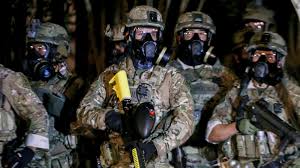
·       Using tear gas and injuring residents engaged in peaceful protests, as recently occurred at protests at the White House and Portland, Oregon.
·       Threatening to send Federal agents to quell peaceful protests regarding Black Lives Matter, especially in “Democratic” cities like Chicago and Albuquerque.
·       Supporting the presence of the Confederate flag, statues and similar symbolism in public places that are racially divisive.
Immigration
·       Misportraying immigrants as criminals despite substantial evidence that their crime rates are lower than native-born residents in the U.S.
·       Failure to process new DACA (i.e., Dreamer) applications despite a recent ruling by the U.S. Supreme Court to allows this process.
Coupled with the support of the Republican party, Trump’s civil war against the American public will likely diminish voter participation among Democrats during the upcoming November election, expand the spread of Covid-19 infections and mortalities, and generally deteriorate the quality of life for all U.S. residents. This level of aggression towards the American public is perplexing, especially given that our political leaders are sworn to protect U.S. residents, not harm them. 
This is not the first time, however, that Trump’s patriotism for his countrymen has been the subject of some controversy. For example, Trump has consistently praised world dictators that are known to oppress the human rights of their constituents and disparaged recognized war heroes like the late Sen. John McCain.  According to a news report, Trump avoided military service during the Vietnam conflict due to a bone spur, which earned him the title “Cadet Bone Spurs” – a term attributed by Senator Tammy Duckworth, a Purpose Heart recipient.  A story in the New York Times [3]reported that a foot doctor in Queens who rented his office from Mr. Trump’s father, Fred C. Trump, suggested that the diagnosis was granted as a courtesy to the elder Mr. Trump. In addition to avoiding military service, Mr. Trump continues to show his support for racially divisive Confederate flags and statues.
By accelerating their civil war, Cadet Bone Spurs and his Republican comrades are apparently prepared to win the November election at any cost to the health, safety and civil rights of the American public. For the upcoming November election, voters should seriously question whether Donald Trump and his fellow Republicans deserve to  represent a country whose values and quality of life they have chosen to abandon.  
References

Governor Greg Abbott Fumbles the Ball on Covid-19

As the leading quarterback in Texas, Gov. Abbott has shown a repeated tendency to fumble the ball as Covid-19 infections have surged in Texas. Instead of following the advice of the nation’s top experts on controlling the spread of Covid-19, Gov. Abbott has opted instead to place the lives of many Texans at risk by following the GOP party line of opening the Texas economy.  The governor was warned repeatedly by the commissioners in Dallas and Harris counties that Texas was not ready to re-open its businesses, but their advice was ignored and sometimes ridiculed by Abbott.  The consequences of this oversight have been devastating. Not surprisingly, the Texas Democratic Party described the governor’s strategy as “reckless.” [1]

After the governor authorized the re-opening of Texas businesses, Travis, Harris and Dallas counties experienced record high cases for two weeks, surging to 4,739 on Thursday morning (June 25th) and tripling since Memorial Day.[2] These three counties are now reviving plans for temporary hospital facilities to prepare for overwhelmed hospitals.  Gov. Abbott finally acknowledged that the opening of businesses was perhaps a bit premature and should be “paused” to ease the burden on Texas hospitals.  As a result, he issued an executive order to close all bars in Texas and reduce the restaurant capacity to 50 percent.   Unfortunately, a definitive action to mandate the use of face masks in public – considered highly effective in slowing the spread of Covid-19 — did not emerge.

As the governor recently explained: “The last thing we want to do is go backwards and close down businesses…the pause will help our state corral the spread.”  Indeed, the Covid-19 spread does not pause simply by closing business establishments but will continue to seek other victims, especially those that are unprotected by face masks, meeting or working indoors in groups, and persons with existing comorbidities. 

The Covid-19 statistics in Texas are quite grim:  137,624 reported cases; 2,324 fatalities, and 59,018 active cases.[3]  How many more lives need to be sacrificed before Governor Abbott decides to more aggressively slow the spread of Covid-19?  Interestingly, while Governor Abbott continues to fumble with his hit-or-miss strategy, other states like New York, New Jersey and Connecticut that have more successfully controlled the spread of Covid-19 are requiring a 14-day quarantine for visitors from states like Texas with big outbreaks of the virus. [4]

Impact on Communities of Color in Texas
The consequences of these poor judgements by Governor Abbott have been compounded by two other factors:  the common victims of Covid-19 and the state’s demographic composition. Various studies have confirmed that Covid-19 infections and mortalities are disproportionately impacting Blacks [5] and Hispanics [6] in communities throughout the U.S.   For example, an analysis of recent Dallas County Covid-19 cases by UT Southwestern Medical Center revealed that Hispanics comprised 60 percent of all new cases while their county population was 40 percent. [7]  
Various explanations have been proposed to explain the heightened vulnerability of Blacks and Hispanics to Covid-19, including the types of jobs held (i.e., factories, food service); living in crowded situations with less options for social distancing; lack of Covid-19 testing; and skepticism about medical doctors.

The urgency of acting more quickly in Texas is compounded by the fact that Hispanics (39.2%) and Blacks (11.7%) collectively comprise half (50.9%) of the state’s population [8] — a demographic reality suggesting that the consequences of Covid-19 for these two segments of the Texas population are likely to be more severe as a result of Abbott’s continued failure to follow the advice of health experts.

To this point, there is evidence that Blacks and Hispanics are struggling more than whites and Asians to meet important daily needs since the pandemic started. In a major effort to help the nation monitor post-Covid-19 experiences on a weekly basis, the Census Bureau along with several federal agencies began surveys with samples of residents in 15 metropolitan areas and has made the results of these surveys available to the public.[9]  The survey, provided in English and Spanish, was designed as a timely and periodic measure of the impact of coronavirus (COVID-19) on the following topics:

  •         Employment status
  •          Food security
  •          Housing security
  •          Education disruptions
  •          Physical and mental well-being

Our analysis of the 1,586 surveys completed in the Dallas/Ft. Worth metropolitan area during the week of June 11, 2020 revealed the following race-ethnic differences on three of the topical areas:
·       Food security:  Hispanics (16.9%) and Blacks (15.5%) were more likely than whites (3.3%) and Asians (3.5%) to state that they were not at all confident about their ability to afford the kinds of food that they needed for the next four weeks.  Hispanics (12.4%) were more likely than whites (5.1%), Blacks (1.9%) and Asians (5.0%) to agree that it was often true that their children were not eating enough because they could not afford enough food.  Hispanics (15.8%) and Blacks (16.0%) were more likely than whites (6.5%) and Asians (2.3%) to agree that they sometimes/often did not have enough food to eat during the past seven days.
·       Employment status:  Hispanics (65.4%) and Blacks (51.9%) were more likely than whites (43.1%) and Asians (32.9%) to state that they or someone in their household had experienced a loss of employment income since March 3, 2020. In addition, Hispanics (48.5%) and Blacks (45.4%) were more likely than whites (24.0%) and Asians (17.8%) to state that they or someone in their household expected a loss of employment income over the next four weeks.
·       Housing security:  Hispanics (27.9%) and Blacks (30.8%) were more likely than whites (9.2%) and Asians (15.8%)  to state that they had no confidence/slight confidence that their household would be able to pay their next rent or mortgage payment on time.

Absence of a Safety Net

For Blacks and Hispanics, surviving the pandemic is analogous to avoiding a torpedo that has already been launched given their history of comorbidities, the jobs that they hold, and other limitations.  Their dilemma is further amplified by the absence of a safety net for healthcare, economic and social services.  Hispanic immigrants are especially vulnerable to the consequences of Covid-19 because they are:
·       Unable to participate in Medicare or Medicaid;
·       Unable to obtain Social Security benefits despite the millions in contributions that employees make annually;
·       Not eligible to obtain food stamps;
·       Not eligible for stimulus payments due to the pandemic;
·       Not eligible for unemployment benefits; and
·       Often working in hazardous environments since their employers are infrequently inspected by OSHA for compliance with Covid-19 standards.[10]
Making matters worse, the State of Texas has joined the Trump administration in requesting that the U.S. Supreme Court end Obamacare – a cruel action that will leave many Texans without the care that they need to recover from the devastation caused by the pandemic.  
Although some reports have indicated that the Covid-19 death rates are not increasing along with increasing infection rates, we should not take any comfort with this trend because race-ethnic information is often missing from death certificates.  The actual mortality rates for Blacks and Hispanics could be much higher than currently reported. [11]

A Different Approach to Stimulating the Texas Economy

The irony in Governor Abbott’s quest to stimulate the Texas economy is not lost here.  Would it not make better sense to more aggressively stop the spread of Covid-19, give residents the opportunity to restore their health and return to jobs at businesses that have been certified as safe from Covid-19 exposure? Texas Hispanics and Blacks, for example, comprise a large segment of the state’s workforce in various industries. Moreover, aggregate household income in 2018 — $184 billion for Hispanics [12] and $73 billion for Blacks [13] – represents a substantial contribution to the Texas economy. The increasing loss of Hispanics and Blacks from the Texas workforce due to Covid-19 infections and mortalities would substantially slow down the economy and possibly negate the progress expected by Abbott in re-opening business establishments.

In the absence of a safety net, it might be a good idea for private corporations in Texas to collectively create a special fund that could be used to support vulnerable groups like Blacks and Hispanics who need financial support during this difficult period. After all, the substantial consumer spending of these two segments has contributed to the profitability of many Texas retailers and manufacturers, such as Walmart, Mission Foods, Fiesta Supermarkets, Kroger, H-E-B, Sherwin-Williams, Home Depot, and various others.  The contributed funds could be distributed to Black and Hispanic families during this difficult period with the goal of maintaining their good health; returning to work in businesses that the state has certified as safe and free of Covid-19 exposure; and continuing their consumer spending at Texas businesses.  This makes more sense – scientifically and economically.

Final Message to Governor Abbott

The following recent quote in The Washington Post accurately summarizes the failure in leadership by Governor Abbott and other leaders that are following the same Covid-19 strategy:
“A record surge in new cases is the clearest sign yet of the historic failure in the United States to control the virus – exposing a crisis in governance extending from the Oval Office to state capitals to city council.” (Page 2) [14]
It is especially perplexing that the pandemic battle in Texas has been presented in news  stories as an ongoing fight between the Governor and judges in Dallas and Harris counties – a pattern that has muted the voices of the Hispanic and Black communities where the virus is likely to have the most devastating impact. The media should assume more responsibility for including the voices of Hispanic and Black leaders in Texas who are supporting the scientific solution that has been advocated by Judge Jenkins and Judge Hidalgo. They could use some help.  
  
Governor Abbott, you have a responsibility to protect the lives of all Texans without delay, especially during a pandemic.  You should forget about party loyalty and act decisively according to the advice of the nation’s health experts.  In case you forgot, start by ordering the following:
·       Mandate the use of face masks in public and impose fines on people that refuse to obey the law;
·       Discipline public officials that refuse to comply with the law;
·       Re-institute the stay-at-home order;
·       Close dining options at restaurants and allow only take-out or delivery;
·       Prohibit the use of group meetings in public facilities (i.e., conventions) and encourage churches to conduct virtual masses instead of masses attended by their membership;
·       Allow schools to open only if they are required to use face masks and adhere to social distancing guidelines. Older or more vulnerable teachers should be assigned to teach online classes;
·       Authorize more financial resources to expand the state’s testing capabilities to avoid the long lines and waiting periods for residents who are becoming increasingly motivated to measure their Covid-19 exposure;
  •  Launch a public relations campaign that shows all public officials wearing a mask and reminding Texas residents that wearing a mask is required by law and not an option. Going forward, the campaign should avoid using the familiar phrase “Wearing a face mask is a good idea” and replace it with a clearer message like “Wearing a face mask is a life or death issue – obey the law;” and
  • Lastly, consider placing Dallas County Judge Clay Jenkins and Harris County Judge Lina Hidalgo to lead a Covid-19 commission composed of the state’s top healthcare experts to manage the state’s Covid-19 strategy going forward. Both judges have been more forceful in warning Governor Abbott against re-opening Texas businesses and showing the appropriate respect for science to protect the health of Texas residents.  Importantly, the unbiased and more objective management of the Covid-19 strategy by this commission should ensure that political considerations are removed from future decisions related to the distribution of Covid-19 treatments and vaccines as they become available.   

End Notes


[1]  Champagne, S.R. (2020 June 25). Gov. Greg Abbott pauses Texas’ reopening, bans elective surgeries in four counties to preserve bed space for coronavirus patients. Texas Tribune. Accessed at: https://www.texastribune.org/2020/06/25/texas-elective-surgeries-coronavirus-greg-abbott/
[2] Champagne, S.R. (2020 June 25). Ibid.
[3]Texas Department of State Health Services, DSHS Covid-19 Dashboard, Data reported as of June 27, 2020. Accessed at: https://txdshs.maps.arcgis.com/apps/opsdashboard/index.html#/ed483ecd702b4298ab01e8b9cafc8b83
[4]Goodman J.D. (2020 June 24). N.Y. Will Impose Quarantine on Visitors From States With Big Outbreaks,  Accessed at https://www.nytimes.com/2020/06/24/nyregion/ny-coronavirus-states-quarantine.html
[5]  Associated Press (2020 June 19). OVID-19 Is Ravaging America’s Vulnerable Latino Communities, New York Times. Accessed at:  https://www.nytimes.com/aponline/2020/06/19/us/ap-us-virus-outbreak.html
[6] Ollove, M. & Vestal, C.  (2020 May 27)  COVID-19 Is Crushing Black Communities. Some States Are Paying Attention. Accessed at: https://www.pewtrusts.org/en/research-and-analysis/blogs/stateline/2020/05/27/covid-19-is-crushing-black-communities-some-states-are-paying-attention
[7] Hacker, H.K., Ambrose, S. and Keomoungkhoun, N. (2020 June 22) ‘Alarming’ trend of Dallas County COVID-19 cases could worsen by Fourth of July, UTSW experts say UT Southern Medical Center. Dallas Morning News. Accessed at: https://www.dallasnews.com/news/public-health/2020/06/22/ut-southwestern-experts-predict-surge-in-coronavirus-cases-hospitalizations-before-fourth-of-july/
[8]Census Bureau (2018).  ACS Demographic and Housing Estimates, Table DP05, 2018 5-Year Estimates. Accessed at www.data.census.gov.
[9]  U.S. Census Bureau. Measuring Household Experiences during the Coronavirus (COVID-19) Pandemic Accessed 5-29-2020 at: https://www.census.gov/householdpulsedata
[10] Held, L. (2020 June 16).  OSHA faulted for not doing more to protect workers from Covid-19. Civil Eats, accessed at https://civileats.com/2020/06/16/osha-faulted-for-not-doing-more-to-protect-workers-from-covid-19/
[11]  Rincon, E.T. (2020, April 16).  Missing Race-Ethnicity Data Complicates Covid-19 Mortality Counts, But the Solution is Simple. Accessed at: https://www.blogger.com/blogger.g?blogID=4666951909336256447#editor/target=post;postID=242538682071119357;onPublishedMenu=template;onClosedMenu=template;postNum=2;src=postname
[13] Census Bureau. Aggregate income in the past 12 months – Hispanic households. Table B19313.  Accessed at: www.data.census.gov
[14] Hawkins, D., Birnbaum, M., Kornfield, M., O’Grady, S., Copeland, K. Lati, M. and Sonmez, F. (2020 June 29). Arizona, Florida, Texas are latest coronavirus epicenters. The Washington Post. Accessed at:  http s://www.washingtonpost.com/nation/2020/06/28/coronavirus-live-updates-us/

Does Unconscious Bias Explain Police Brutality?

National and global attention has shown a spotlight on the brutal killing of George Floyd – an unarmed black man who died when Officer Derek Chauvin pressed his knee against Floyd’s neck for an estimated eight minutes and 45 seconds while other officers looked on without intervening.  Although Officer Chauvin has been charged with second degree murder, protests continue to advocate for police reforms to stop these needless killings.  Indeed, the historical record reveals that law enforcement throughout the U.S. has all but declared open season on Black males. For example, a Tulsa Police Department Division Commander, Major Travis Yates, recently explained that African Americans probably ought to be shot more often based on the amount of contact that they have with the police.[i]
In the ensuing debates about police reforms, unconscious bias training has emerged as one potential strategy. But what is “unconscious bias”?   Following is one simple definition:

Unconscious biases, also known as implicit biases, are the underlying attitudes and stereotypes that people unconsciously attribute to another person or group of people that affect how they understand and engage with a person or group.”  [ii]

The key term here is “underlying” which suggests that the individual may not be aware of these attitudes and stereotypes.  For example, gender bias is the tendency to prefer one gender over another gender.  Confirmation bias is the inclination to draw conclusions about a situation or person based on your personal desires, beliefs and prejudices rather than on unbiased merit.  Although there are different types of unconscious bias, they share one thing in common:  a lack of awareness or consciousness by the individual who may later choose to act on these beliefs.
Regardless of the type of unconscious bias under consideration, I do not buy the argument that people are not conscious of their “underlying” attitudes and stereotypes – as if their behavior deserves to be forgiven or not disciplined due to an alleged lapse in memory or consciousness.  The following three examples will hopefully make my point.
  
Training Police on Using Pepper Spray
A news article in The Dallas Morning News described an unusual training program at the Cambridge police academy on the appropriate use of pepper spray when apprehending Mexican American suspects. [iii]  Police academy trainers were instructing new cadets to use stronger doses of pepper spray on Mexican American suspects. Officer Gutoski, the department training officer, explained their rationale in rather un-scientific terms: “Mexicans grow up eating too much spicy food, and because they spend so much time picking hot peppers in the fields….so with Cajuns, Mexican-Americans, Pakistani, Indian…what happens is that pepper spray is effective for a much shorter time.”  Even more unnerving is the explanation by departmental spokesman, Frank Pasquarello, that “Officer Gutoski was repeating information that’s shared all the time among officers in informal training sessions on the use of pepper spray.”   The training program might have been considered an act of “unconscious bias” if not for the fact that it was part of the approved training program.
Is Racial Profiling on the Decline?
A recent analysis of traffic stops made by the Texas Highway Patrol revealed that racial profiling of Hispanics was on the decline, although critics suspected that the Department of Public Safety was deliberately misclassifying Texas drivers that they stopped in order to lower the state’s racial profiling statistics. [iv] Further analysis, however, revealed that the DPS troopers were assigning the race category based on the physical characteristics of the drivers, rather than simply asking each driver to identify themselves by race or ethnicity. To achieve the lower racial profiling statistics, troopers apparently found it convenient to classify Hispanic drivers as white. Was this unconscious bias?  Perhaps not since the misclassifications by race-ethnicity were not random and designed to achieve one objective:  to lower the racial profiling statistics in Texas.
Just a Cup of Coffee

A Starbucks shop in Pennsylvania received national attention regarding the mistreatment of two Black men who were asked to leave the premises even though they were just waiting for a meeting to take place.  The Starbucks manger called police to remove the two men from the premises.  The CEO of Starbucks wasted little time in personally apologizing to the two black men for their discriminatory treatment and announced that all Starbucks employees would be required to attend a workshop to identify and remediate unconscious bias.
In my view, the Starbucks manager in Philadelphia that requested police action to remove the two black customers was not motivated by “unconscious bias,” but rather by conscious beliefs and prejudices against blacks that were not detected in the screening process by Starbucks staff.  While it is common practice for organizations to screen applicants for job skills, personality, career and criminal background, it seems that screening for beliefs and attitudes about blacks and Latinos should also be part of the hiring process.  
Does cultural knowledge or awareness influence medical treatment?

One recent study explored the trend in pain management wherein whites were more likely than Blacks to be prescribed strong pain medications for equivalent treatments.[v]  Researchers at the University of Virginia quizzed white medical students and residents to learn how many believed inaccurate statements about biological differences between the two races – such as “black people’s blood coagulates more quickly,” “Blacks’ skin is thicker than whites’,” and “Blacks’ nerve endings are less sensitive than whites.’ ” Although they expected some endorsement of these statements, the investigators were surprised that so many in the group with medical training endorsed such beliefs. It was discovered that those who held false beliefs often rated Black patients’ pain lower than that of white patients and made less appropriate recommendations for the treatment of their pain. 
Does Unconscious Bias Help Us Understand Police Brutality?
It is not likely that Officer Chauvin experienced unconscious bias while he forced his knee on Floyd’s neck for eight minutes and 45 seconds.  It is more likely, based on his past behavior, that he intentionally and consciously killed Floyd.  Officer Chauvin should have been removed from policing a long time ago, and it is not likely that any amount of unconscious bias training could have changed his animosity towards blacks. Such individuals pose a danger to the safety of all residents, especially people of color.
Beliefs, prejudices or stereotypes about people of color are a consequence of many factors – family values, a past negative experience, media stereotypes, and growing racial segregation in residences, churches, schools, and social networks – factors that are very resistant to change. In addition, the current political climate in the U.S. has “normalized” racist commentary and behaviors towards blacks and Latinos, making it much easier to mistreat these groups.  In 2018, there were 7,120 hate crime incidents in the U.S. with a majority of the reported hate crimes motivated by race, ethnicity or ancestry bias (59.6 percent). [vi]  (See Figure 1 below)

Figure 1

Conclusion
  The prevalence of hate crimes based on race, ethnicity or ancestry should serve as a loud warning bell to employers that current employees and new hires, especially armed police officers, should be vigorously investigated for past experiences and current attitudes related to people of color. Once the presence of these negative attitudes or stereotypes is confirmed, these individuals should not be hired. Current employees should be removed from the organization or re-assigned to a position that does not require interaction with the public. Indeed, it is insufficient to simply conclude that a person shows evidence of unconscious bias that is potentially harmful and expect that a workshop will magically remediate their hostility towards Blacks, Latinos or Asians.  
End Notes

[i] Li, D.K.   (2020, June 11).  African Americans ‘probably ought to be’ shot more by police, a top Tulsa officer said. NBC News. Accessed at https://www.nbcnews.com/news/us-news/african-americans-probably-ought-be-shot-more-police-top-tulsa-n1229981
[iii] Dallas Morning News (1999, August 14).  Pepper spray remarks backfire on department. Cited from  Los Angeles Times.
[iv] Rincón, E. T. (2016). How DPS can improve its system of recording race/ethnicity during traffic stops.  Dallas News, Jan. 2016. Available at https://www.dallasnews.com/opinion/commentary/2016/01/27/edward-t.-rincon-how-dps-can-improve-its-system-of-recording-raceethnicity-during-traffic-stops
[v] Hoffman, K.M., Trawalter, S., Axt, J.R., and Oliver, M.N.(2016, April 19).  Racial bias in pain assessment and treatment recommendations, and false beliefs about biological differences between blacks and whites.  PNAS Vol. 113 No. 16.

[vi]  McCarthy, N. (2019, November 13).  U.S. Hate Crimes Remain At Heightened Levels. Statistica. Accessed at https://www.statista.com/chart/16100/total-number-of-hate-crime-incidents-recorded-by-the-fbi/

Texas GOP Reveals Cowardice on Mail-In Ballot Issue

It was a coward’s decision – the first thought that came to my mind when I learned that the Texas Supreme Court had sided with Attorney General Paxton in denying Texas voters the right to vote by mail if they feared infection or death of Covid-19 by voting in person.  Indeed, this decision was especially disturbing given the recent news that a number of Wisconsin voters became infected from being forced to vote in person by Republican leaders and their State Supreme Court. 
This level of desperation follows previous failed efforts to limit the political clout of traditionally Democratic voters in Texas.   The dust has barely settled, for example, on recent GOP efforts to include a citizenship question in the 2020 Census; attempts to purge eligible Texans from registered voter lists;  reducing the number of polling stations in communities of color; and passing voter ID laws.
Rather than invest in a competitive strategy to win the hearts and minds of Texas voters, it appears that the Republican Party has become so desperate at the thought of losing their political stronghold in Texas that they are willing to risk the health and safety of Texas voters to maintain their status quo. The benefit to society, they argue, is the prevention of large-scale voter fraud.  In fact, numerous national studies have confirmed that evidence of voter fraud is practically non-existent in U.S. elections and contradicted by the fact that 35 states in the U.S. continue to use mail-in ballots effectively to encourage voter participation for all residents regardless of their political affiliation or other characteristics.
Interestingly, Texas Attorney General Paxton argued before the Texas Supreme Court that a physical condition must be present in order to qualify to use a mail-in ballot,  although age and military service are common exceptions.  The fear of becoming sick or dying from the coronavirus, it was argued, does not constitute a physical condition and therefore cannot be used as a basis to request a mail-in ballot. The Court, however, determined that voters can decide for themselves if they think a “physical condition” might prevent them from voting in person or harm them.  However, Attorney General Paxton warned that he plans to criminally prosecute third parties that advise voters to apply for a mail-in ballot based solely on fear of contracting COVID-19.  In other words, it is up to the voter to determine whether in-person voting will likely lead to injury due to a physical condition.
I find this argument incredulous for two reasons.  First, fear and anxiety can be both facilitating and debilitating conditions that can influence the performance of common human behavior. In many instances, fear and anxiety serve as effective survival tools for healthy living to prevent us from engaging in harmful activities, such as petting a wild animal or exposure to toxic environments.  When death is imminent or highly probable from such exposure, only a fool would knowingly risk their life if an alternative action was available. Why is the Attorney General forcing voters into the lion’s den just to exercise their right to vote?
 Secondly, various recent studies have found that Blacks, Latinos, Asians and the elderly are experiencing disproportionately higher levels of Covid-19 mortalities when compared to their representation in their communities.  Part of the explanation for this trend is that these groups have higher levels of comorbidities that increase their likelihood of dying from the coronavirus – such as diabetes, immune diseases, kidney disease, etc.  – and have living conditions and occupations that increases their exposure to the coronavirus.  Moreover, these mortality rates are likely higher than currently reported since Texas does not require the recording of race-ethnic information on Covid-19 mortalities, leading to missing data and misleading indicators.   The conclusion that it is ultimately up to the voter to determine if they will experience injury by voting in person is problematic, especially for persons with comorbidities who usually follow their doctor’s advice on their medical condition.  Should a diabetic, for example, just provide a statement from their doctor that confirms their medical condition and the danger of increased exposure to Covid-19?  Clearly, comorbidities are “physical conditions” that cannot be dismissed by Attorney General Paxton as easily as fear of the coronavirus.
 Undoubtedly, Texas Republicans are probably applauding their success on the mail-in ballot issue and may believe that their political position in Texas has been solidified by the Texas Supreme Court decision. My hope is that Texas voters with higher moral and ethical standards will prevail in the coming elections by rejecting the cowardly actions taken by Texas Republicans.  In reaching the milestone of 100,000 Covid-19 deaths in the U.S., it is hardly the time to celebrate political victories that will unnecessarily diminish the lives of our children, the elderly and communities of color.